

Golf Laser Rangefinders
The powerful Shot Scope laser rangefinders with a fast-firing laser and pack of features for stability and accuracy The Shot Scope PRO LX and PRO...
View full details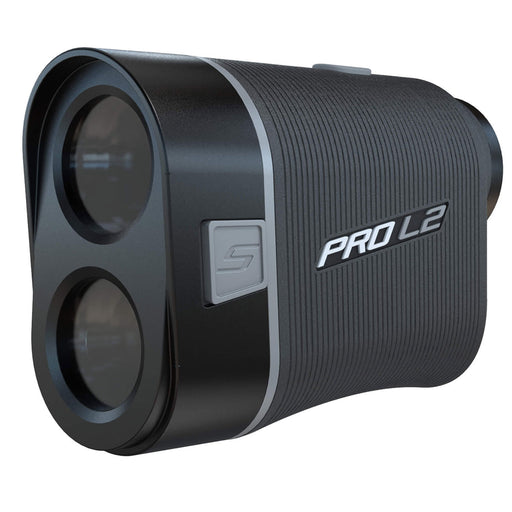
Precise, accurate, and packed with advanced features at a super-affordable price point The Shot Scope PRO L2 offers everything you need and exp...
View full detailsThe Series 3 Max+ Laser Rangefinder is the next iteration of the flagship, best-selling S3 laser line. It offers improved software and electronics,...
View full detailsThe new and improved Shot Scope laser rangefinders with a fast-firing laser and a pack of features for stability and accuracy Accurate to within...
View full detailsChange the way you see the course with the Blue Tees Golf Series 3 Max golf rangefinder with slope The Series 3 Max is our most advanced rangefin...
View full details
The Pinned Golf Prism+ Laser Rangefinder gives you fast, pinpoint accuracy with first target acquisition, slope switch, 7x magnification, and a 4K ...
View full detailsThe Nikon COOLSHOT 50i GII Golf Laser Rangefinder delivers fast, precise readings with slope compensation, Dual Locked On QUAKE pin confirmation, a...
View full detailsGet consistent accuracy with the easy-to-use GolfBuddy aim L10 & aim L10V Golf Rangefinder with Slope Get accurate distance on any targets wi...
View full details
The Arccos Smart Laser Rangefinder Bundle delivers real-time plays like distances, automatic pin setting, smart shot tracking, and full-year subscr...
View full detailsGet rock-solid accuracy with the Nikon COOLSHOT PROIII STABILIZED Golf Laser Rangefinder. Advanced stabilization cancels hand shake, HYPER READ tec...
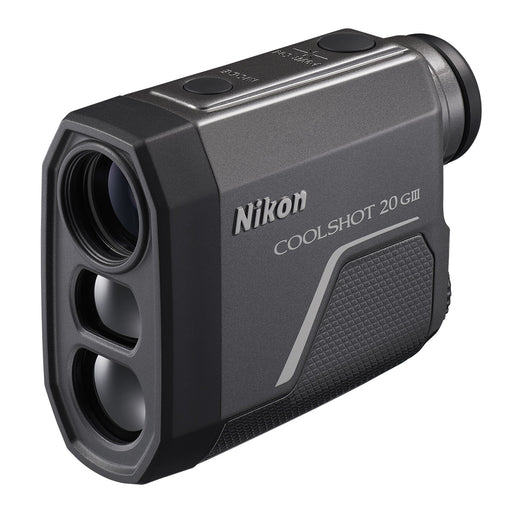
View full detailsThe refreshed, next-generation Nikon COOLSHOT 20 GIII and COOLSHOT 20i GIII are packed with Locked on Quake, First Target Priority mode, increased ...
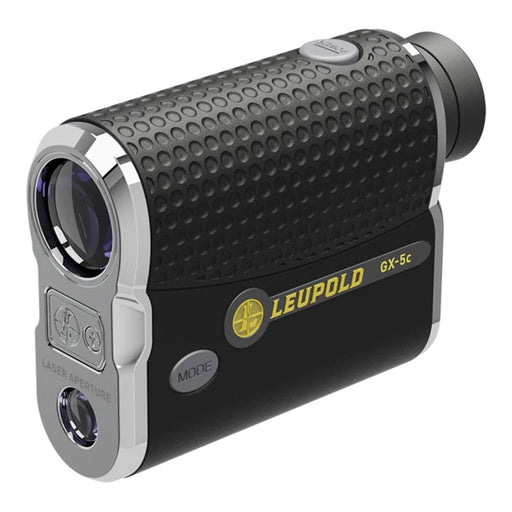
View full detailsUnlock precision with flag lock and prism lock: Leupold GX-5c rangefinder's game-changing features If you want to shave strokes off every round b...
View full details


It fires an invisible laser beam at your target, measures the time it takes to bounce back, and converts that into a precise yardage reading. The whole process takes under a second on most quality models. Flag lock technology helps ensure the laser is reading the pin rather than objects behind it.
Distance-only laser rangefinders are permitted under USGA rules in most amateur competitions. Models with active slope are not, unless the feature is switched off. Always confirm with your tournament committee since local rules can vary.
Flag lock is the technology that helps the rangefinder prioritize the closest target — the flagstick — rather than locking onto the background. Many models confirm the lock with a vibration or beep so you know you got the pin and not the tree line behind the green.
Most models are rated between 400 and 1,000 yards, though most golfers will never need more than 400 yards on a course. The rating matters more as a proxy for optical quality and laser strength. A unit rated to 700 or 1,000 yards will typically give you faster, crisper readings on closer targets too.
It depends on how steady your hands are and how quickly you play. Stabilization smooths out hand tremors so the image locks onto the flag faster and cleaner. It is a noticeable upgrade if you have any hand shake or tend to range quickly mid-round. If you have a steady hold and take your time, a non-stabilized unit at a lower price point will serve you just as well.