Golf Rangefinders with Slope
At PlayBetter, we carry the top slope rangefinders from Bushnell, Garmin, Blue Tees Golf, Nikon, Shot Scope, Precision Pro, and more — covering every price point from budget-friendly to tour-level. Most feature a slope on/off toggle, so you stay tournament-legal when it counts and switch slope back on for casual rounds and practice.
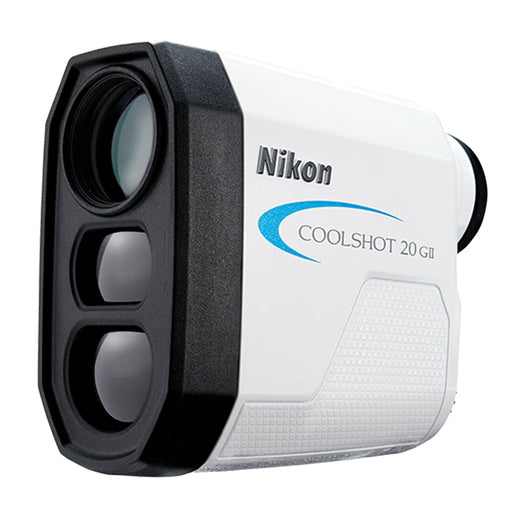
Be simply provided with quick, accurate, and easy-to-read yardages with the Nikon COOLSHOT 20 GII Reborn to a compact rangefinder, the Nikon COOL...
View full detailsThe Nikon COOLSHOT 50i GII Golf Laser Rangefinder delivers fast, precise readings with slope compensation, Dual Locked On QUAKE pin confirmation, a...
View full detailsGet rock-solid accuracy with the Nikon COOLSHOT PROIII STABILIZED Golf Laser Rangefinder. Advanced stabilization cancels hand shake, HYPER READ tec...
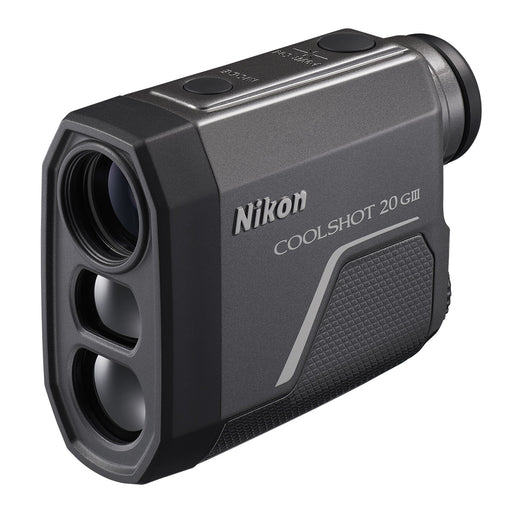
View full detailsThe refreshed, next-generation Nikon COOLSHOT 20 GIII and COOLSHOT 20i GIII are packed with Locked on Quake, First Target Priority mode, increased ...
View full details
Slope measures the elevation change between you and the target, then calculates how far the shot actually "plays" given that incline or decline. A 150-yard shot that plays uphill to an elevated green might play like 163 yards. Flat yardage gets you in the neighborhood. Slope-adjusted yardage gets you on the green.
For most golfers — especially those who play courses with any kind of terrain — a slope rangefinder is worth every extra dollar. It's the difference between trusting your club selection and second-guessing it right up until you pull the trigger.
If you compete in USGA-governed rounds, stroke play events, or any official club competition, slope is not allowed during the round. That's the rule. But nearly every slope rangefinder on the market today includes a slope toggle switch — flip it off, and the device becomes tournament legal. You'll often see a visual indicator (a slope icon that disappears or a color change in the display) confirming the mode.
So you don't need to own two rangefinders. One slope model with a toggle covers both your Saturday practice round and your Thursday medal round. See our full breakdown of the best golf rangefinders with slope.
The right one depends on three things: how fast you need a reading, how far your eyes need help, and how much you want to spend.
Speed and flag lock matter most for golfers who play at pace. Look for models with fast acquisition — under half a second — and a vibration or JOLT confirmation that tells you the laser locked onto the pin and not the trees behind it. Bushnell's PinSeeker with JOLT and Blue Tees' Pin Sensor technology are the standards to beat here.
Optics and magnification matter if your eyes need a little more help identifying the flag at distance. Most slope rangefinders sit in the 6x magnification range, which is solid for the majority of golfers.
Budget is an honest conversation. You don't need to spend $500 to get a great slope rangefinder. Some models deliver accurate slope readings and fast flag lock at a fraction of the price of tour-level units. If you're comparing value options head-to-head, our Best Golf Rangefinders guide breaks it all down.
Want to see how rangefinders compare to GPS watches for course management? We cover that too — Rangefinder vs. Golf GPS: Which Is Better?
Not during competition, but most slope rangefinders include a toggle that disables slope and makes the device tournament legal under USGA and R&A rules. Flip it off before your round and you are good to go. When in doubt, confirm with your tournament committee since some local rules vary.
A regular rangefinder gives you straight-line distance. A slope rangefinder factors in elevation change and gives you the adjusted "plays like" distance instead. On flat courses the difference is minor. On hilly terrain it can swing your club selection by two or three clubs on a single approach shot.
Most quality slope rangefinders are accurate to within one yard on distance and handle grade changes of 20 degrees or more. Premium models from Bushnell, Garmin, and Blue Tees are accurate enough for tour-level practice use. Even budget-friendly options from reputable brands will give you readings you can confidently act on.
Yes, and that is exactly what the slope toggle is built for. Use slope during practice rounds and casual play, then switch it off before any competition round. One device covers both situations without compromise.
They do different jobs. A rangefinder gives you precise pin distance with slope compensation. A GPS watch gives you front, center, and back of green yardages at a glance plus hazard distances and course mapping without lifting a device to your eye. Many golfers carry both.